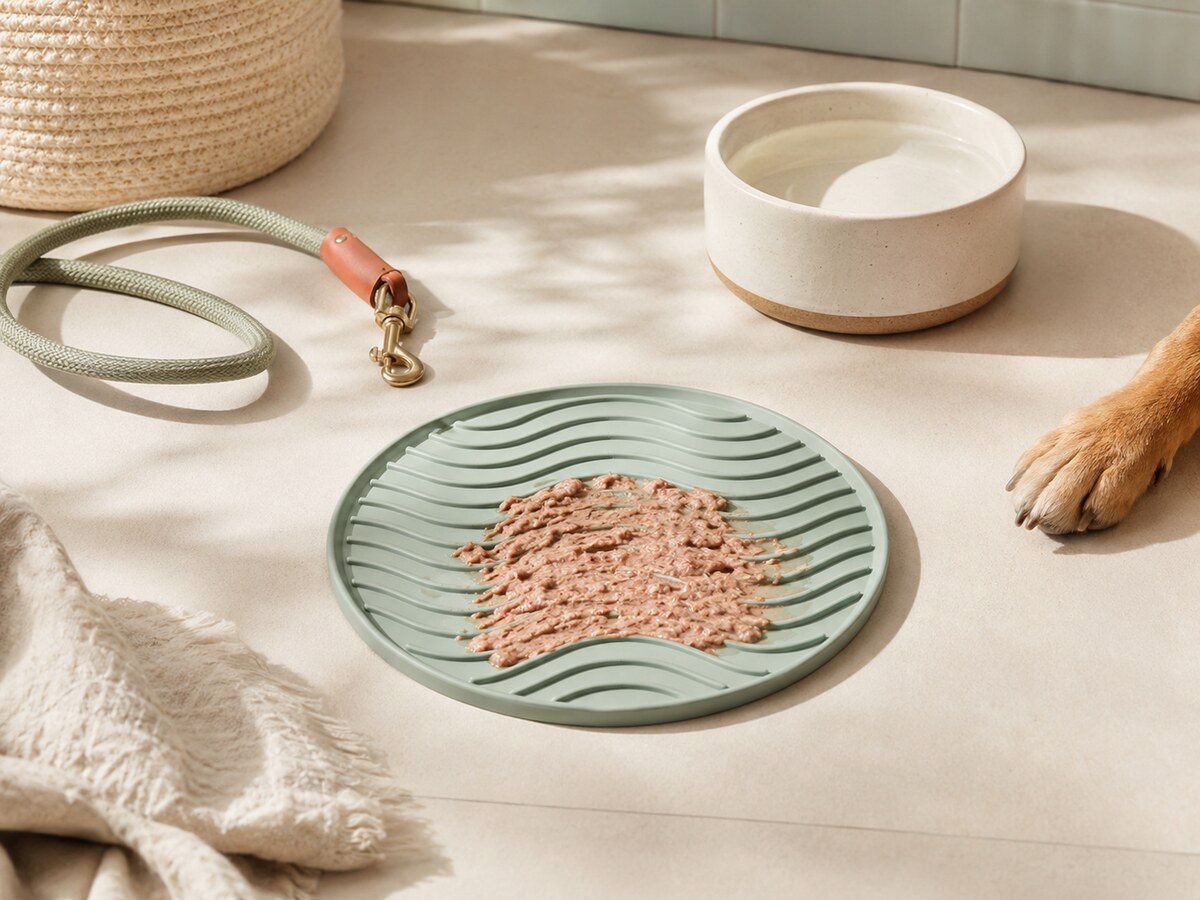
Silicone lick mats for dogs use grooves, pockets or raised patterns to spread soft food across a larger surface. They can turn part of a meal or an appropriate treat into a slower, supervised activity. A lick mat is not a chew toy, and its value depends on choosing the right size, using suitable food and removing the mat when the session ends.
What a lick mat can—and cannot—do
Patterns make food take longer to reach than it would from an open spoon or bowl. That can create a focused activity and may help some dogs eat soft food at a more measured pace. Individual behavior varies, so avoid promises that a mat will treat anxiety or solve every feeding problem.
A dog that immediately bites, folds or guards the mat needs a different setup. Supervise every session and remove the mat before chewing begins.
Choose a useful size and texture
The dog’s muzzle should fit comfortably across the usable surface. Very deep, narrow pockets can be frustrating for a small dog, while a very shallow pattern may be cleared quickly by a larger dog. Mixed textures provide different paths and can hold foods of different consistency.
The Ocean Wave Silicone Pet Lick Mat combines broad channels and smaller sea-inspired details. Whatever design you choose, inspect the corners and raised pattern for places that might encourage chewing.
Understand suction-cup limits
Suction cups work best on a clean, smooth, non-porous surface. Wash and dry both the mounting surface and the underside of the mat, press each suction zone firmly and test the grip before adding food. Textured tile, grout, wood grain and dusty surfaces may reduce holding power.
Suction does not make the mat chewproof or suitable for unsupervised use. It simply helps reduce movement on a compatible surface.
Select food with the dog’s diet in mind
Use a food already suitable for your dog, such as part of the dog’s normal wet meal or a veterinarian-approved soft food. Introduce only one unfamiliar ingredient at a time and keep treat calories within the dog’s overall feeding plan.
Avoid ingredients that are unsafe for dogs. Products intended for people may contain sweeteners, high salt levels, seasonings or other components that are inappropriate for pets. If your dog has allergies, digestive disease or a prescribed diet, ask your veterinarian before adding new foods.
Spread a thin, even layer
- Place the clean mat on a suitable surface and test the suction.
- Measure the portion rather than filling every groove automatically.
- Spread a thin layer across several texture zones.
- Invite the dog to begin while you remain nearby.
- End the session and remove the mat when the food is gone or chewing starts.
A thinner layer is usually easier to clean and helps you control calories. For a first session, keep the portion small so you can observe how the dog interacts with the pattern.
Cleaning after every use matters
Rinse promptly before food dries into detailed grooves. Use warm water, mild dish soap and a soft brush that can reach every channel. Flex the mat gently to expose the pattern, but do not use sharp tools that could cut the silicone.
Dishwasher suitability varies, so follow the final product instructions. Even when dishwasher use is permitted, inspect the grooves after washing and let both sides dry completely before storage.
Freezing requires product-specific guidance
Some owners freeze prepared lick mats for a longer session, but not every product or food is intended for that method. Confirm the mat’s temperature guidance and the food’s safe handling requirements. Frozen food can be harder on sensitive teeth, so observe the dog and stop if the texture appears uncomfortable.
Inspect before and after every session
Look for cuts, missing pieces, stretched corners, deep tooth marks or a surface that can no longer be cleaned thoroughly. Discard a damaged mat. Small silicone pieces can become a swallowing hazard, and repair attempts are not appropriate for a feeding product.
When a travel bowl is the better tool
A lick mat is designed for spreadable food and supervised enrichment. For water or a full meal away from home, a collapsible silicone travel pet bowl is more practical. Use each product for its intended purpose.
Frequently asked questions
Can I leave my dog alone with a lick mat?
No. Supervise use and remove the mat when the food is gone or the dog begins to bite or fold it.
How often should a lick mat be washed?
Wash it after every use. Food residue in small grooves can dry quickly and become difficult to remove.
Are lick mats only for dogs?
Some products may be suitable for other pets, but size, material, food and supervision requirements differ. Follow the product instructions and ask a veterinarian when unsure.
Browse the SILIVEX Pet Essentials collection for supervised feeding and travel accessories.
Product construction and care limits vary. Check the instructions supplied with the exact item and contact SILIVEX when you need help comparing options.