Teething is a natural stage of early development, and for many families, a well-designed baby teether quickly becomes one of the most frequently used everyday items. But when parents start shopping for a silicone teether, they may find dozens of shapes, colors, textures and designs that look similar at first glance.
A good teether should be more than cute. Material selection, overall shape, gripping area, surface texture and cleaning convenience all affect how practical the product is in daily use.
At SILIVEX, we believe baby products should combine thoughtful design with simple, everyday functionality. Our ocean-inspired silicone teether collection—including the Crab Teether, Starfish Teether and Dolphin Teether—was developed around these same principles.
1. Start with the Material
Material is one of the first things parents should consider when choosing a baby teether.
Soft silicone is widely used for modern teething products because it can provide a flexible, comfortable chewing surface while allowing designers to create smooth edges, integrated handles and different tactile textures.
When comparing silicone teethers, look for products made from silicone intended for baby or food-contact applications, and check the manufacturer’s product information for relevant material and safety documentation.
A quality silicone teether should also have a smooth, even surface without sharp edges, obvious molding defects or loose decorative parts.
For products intended for young children, construction is especially important. U.S. Consumer Product Safety Commission guidance emphasizes that toys for children under three should not create hazardous small parts that can become choking risks.
This is one reason SILIVEX teethers use an integrated silicone body design rather than relying on multiple detachable decorative accessories.
2. Choose a Shape That Is Easy for Small Hands to Hold
A teether may look attractive on a product page, but its shape needs to work in a baby’s hand.
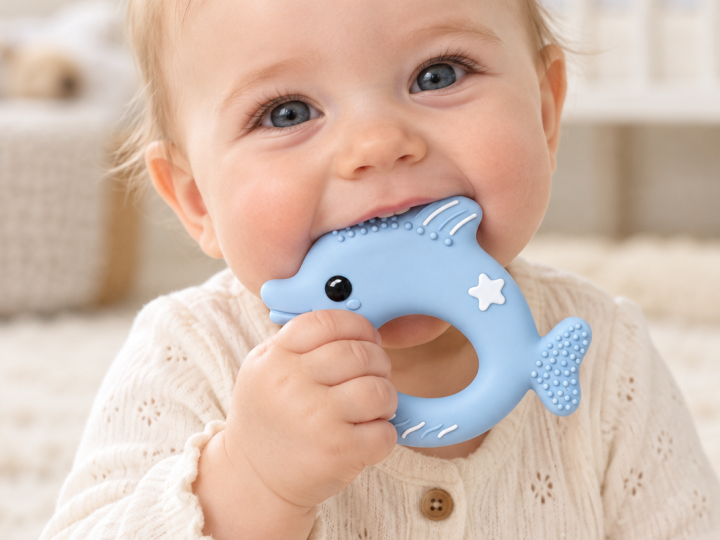
Babies are still developing grip strength and hand coordination, so large, easy-to-reach openings can make a teether easier to grasp, rotate and reposition.
The center opening is therefore an important part of teether design.
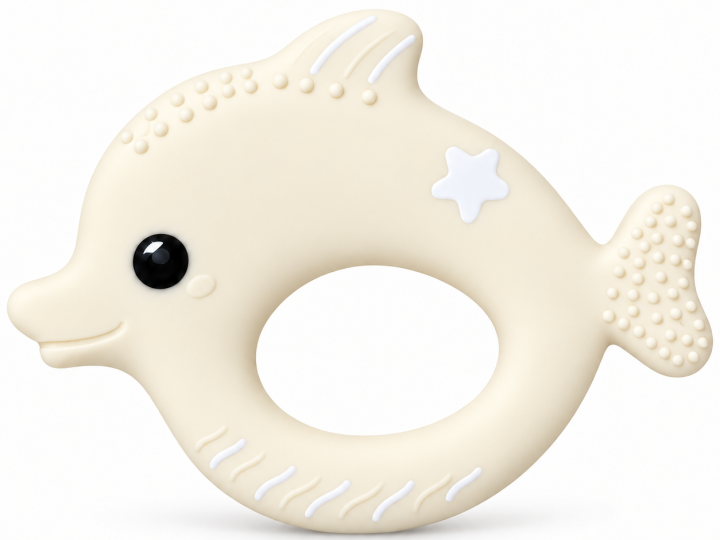
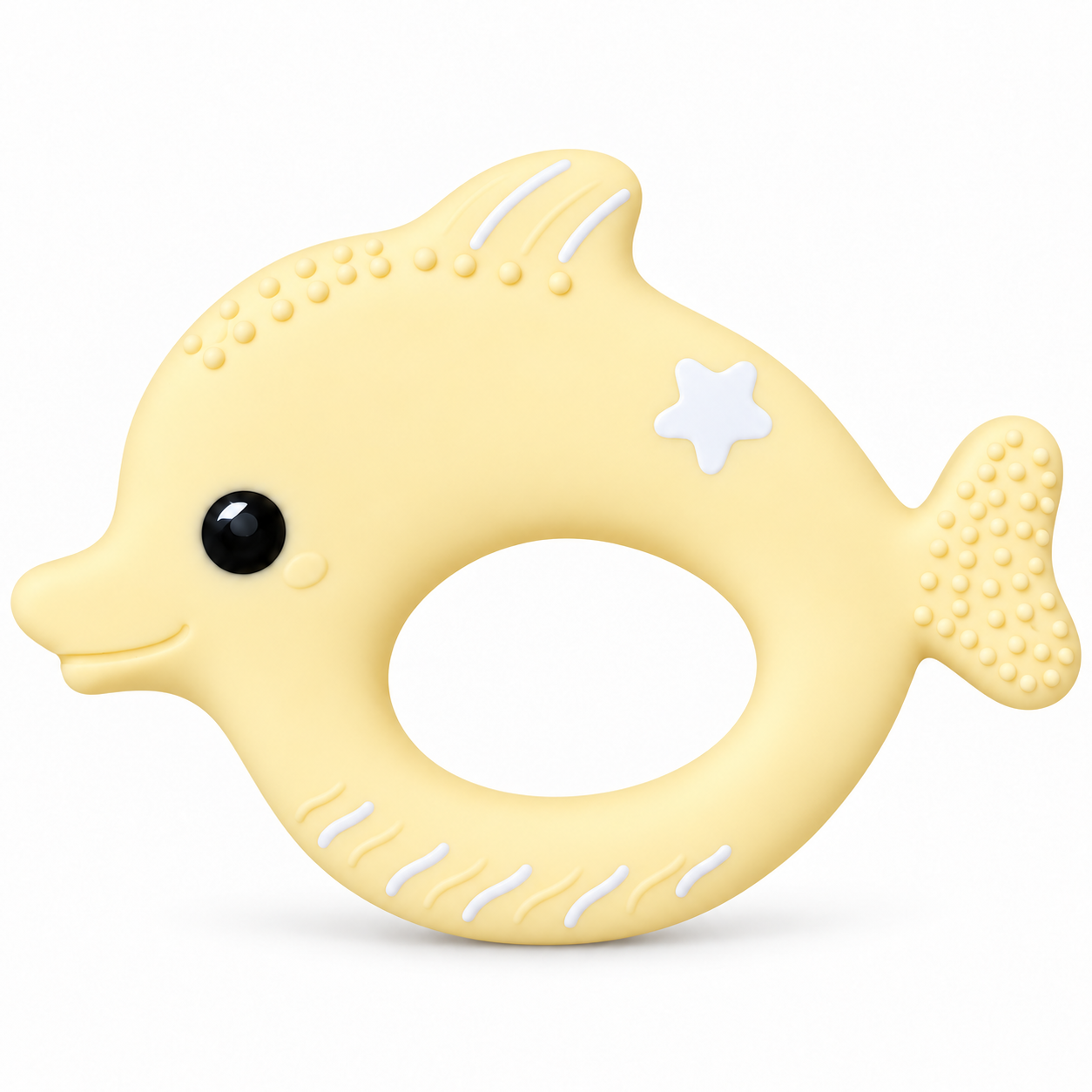
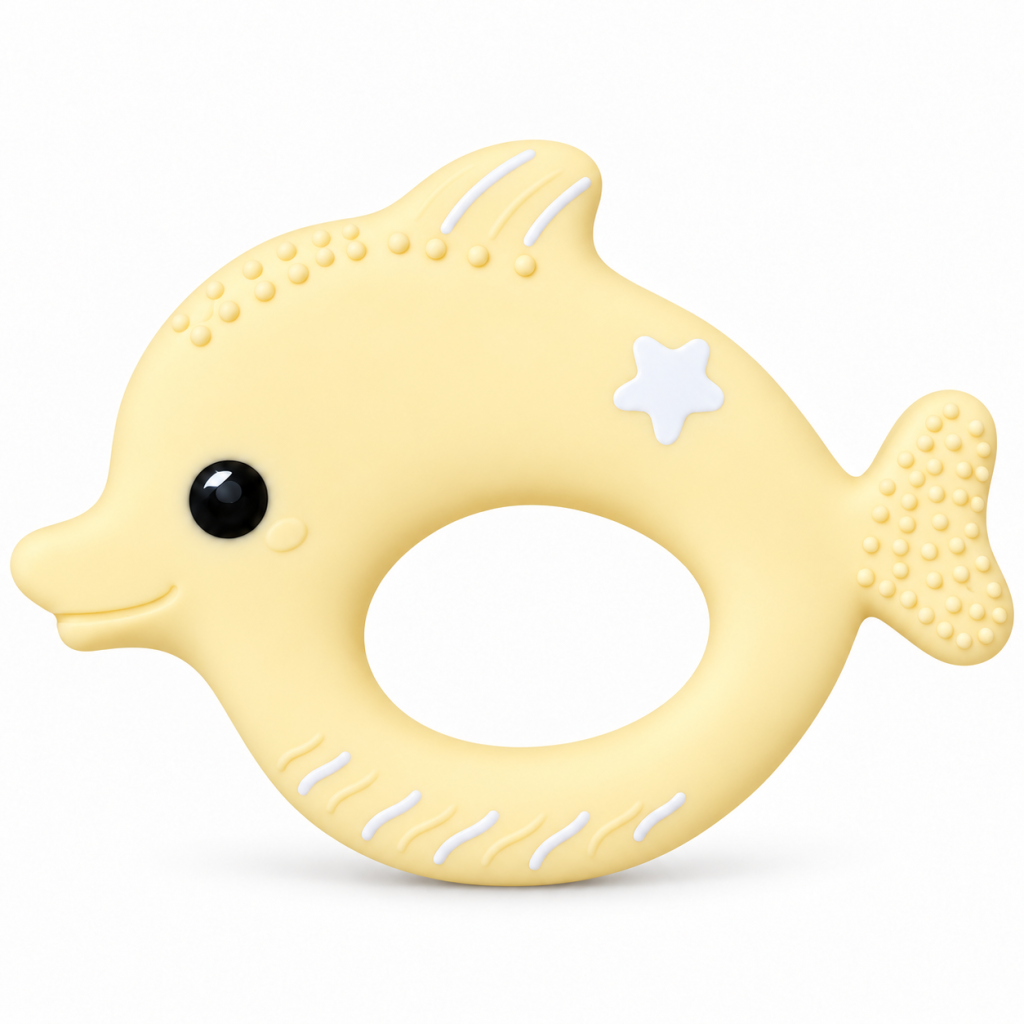
For example, the SILIVEX Crab Teether has a large open gripping area beneath the crab body. The Starfish Teether uses a central circular opening, while the Dolphin Teether incorporates a large opening directly into the body.
These designs allow the teether itself to remain visually playful without sacrificing basic handling convenience.
When evaluating a teether shape, parents can ask a few simple questions:
- Is there a comfortable area for the baby to hold?
- Are the edges rounded?
- Are there long, thin or unnecessarily protruding sections?
- Can the baby easily change the position of the teether while holding it?
- Does the shape feel balanced rather than excessively heavy on one side?
Simple geometry often works better than overly complicated designs.
3. Look for Different Surface Textures
Texture is one of the most useful design features of a silicone teether.
Instead of making every part of the product completely smooth, designers can incorporate raised dots, ridges, lines and other molded patterns into different areas of the silicone surface.
These textures provide different tactile experiences as babies explore the product with their hands and mouths.
The SILIVEX ocean collection uses this idea in three different ways.
The Crab Teether combines a broad smooth body with raised dot textures across the claws and side sections. Its rounded crab shape also creates several different areas that can be reached from different angles.
The Starfish Teether incorporates multiple texture zones across its five arms, including raised dots, linear ridges and wave-like patterns. This makes one single teether offer several different surface sensations.
The Dolphin Teether keeps a relatively smooth body while adding textured areas around the back and tail, balancing a clean silhouette with tactile details.
The goal is not to add texture everywhere. A good design usually combines smooth areas with textured areas so that the product remains comfortable and easy to clean.
4. Avoid Overly Complicated Designs
More detail does not always mean better design.
Deep grooves, narrow openings and complicated three-dimensional structures can trap moisture, food residue or dust. For something that may be washed frequently, simpler construction can make everyday care much easier.
This is where one-piece silicone designs have an advantage.
Parents should pay attention to areas where two materials are joined together, narrow channels that are difficult to reach, hollow sections that may retain water, or decorative components that may loosen after repeated use.
A clean, integrated design can reduce these unnecessary cleaning challenges.
The three SILIVEX ocean teethers are designed around relatively open shapes and accessible surfaces, making it easier to visually check the product after washing.
5. Think About Cleaning Before You Buy
A teether will probably be washed many times, so cleaning convenience should be treated as a core product feature rather than an afterthought.
Before buying, imagine washing the product under running water.
Can you reach all the surfaces easily? Are there hidden cavities? Does water have places to collect? Can the teether dry naturally without complicated disassembly?
For everyday care, parents should always follow the cleaning and temperature instructions supplied with the specific product.
After cleaning, allow the teether to dry thoroughly before placing it into a clean storage container.
For families who take teethers outside the home, a compact storage box can also help keep the teether separated from keys, bags, tabletops and other frequently touched items.
This is why SILIVEX has also developed a compact PP storage case that can be used alongside small everyday products such as teethers and accessories.
6. Consider How the Teether Will Be Used Every Day
A good baby product needs to work outside the studio photograph.
Think about the situations in which the teether will actually be used: at home, in a stroller, during travel, at a restaurant or inside a diaper bag.
An oversized teether may be difficult to carry. A very small teether may be difficult for a baby to grip safely. Highly complex shapes may be harder to clean when away from home.
The best choice is usually a balance between:
Comfortable size + easy grip + useful texture + simple cleaning + convenient storage.
Parents may also choose more than one design. Babies can respond differently to different shapes and textures, so having several simple options can be useful.
The American Academy of Pediatrics notes that cool, firm teething items can be used to help soothe babies during teething, while products should not be allowed to become excessively hard from freezing. Always follow the specific manufacturer’s instructions for temperature and use.
7. Cute Design Still Matters
Function comes first, but visual design is also part of the experience.
Baby products are used every day and often become part of a family’s nursery, travel bag and daily photographs. Soft colors, friendly shapes and recognizable animals can make practical products feel more enjoyable.
SILIVEX chose an ocean theme for this collection because the crab, starfish and dolphin provide naturally recognizable silhouettes while also allowing different gripping structures and texture layouts.
Rather than creating three products with the same body and simply changing the decoration, each design has its own shape and tactile character.
That creates a collection that feels connected while still giving parents meaningful choices.
A Simple Teether Buying Checklist
When comparing silicone baby teethers, focus on five things: suitable silicone material, rounded and integrated construction, an easy-to-hold shape, varied but cleanable textures, and a design that can be washed and dried without difficulty.
The best teether does not need to be complicated. Thoughtful details often matter more than extra features.
At SILIVEX, our goal is to create small everyday products that feel playful to children and practical to parents. The Crab, Starfish and Dolphin silicone teethers reflect that idea through friendly ocean-inspired shapes, easy-grip openings, tactile surfaces and straightforward everyday care.
Product construction and care limits vary. Check the instructions supplied with the exact item and contact SILIVEX when you need help comparing options.