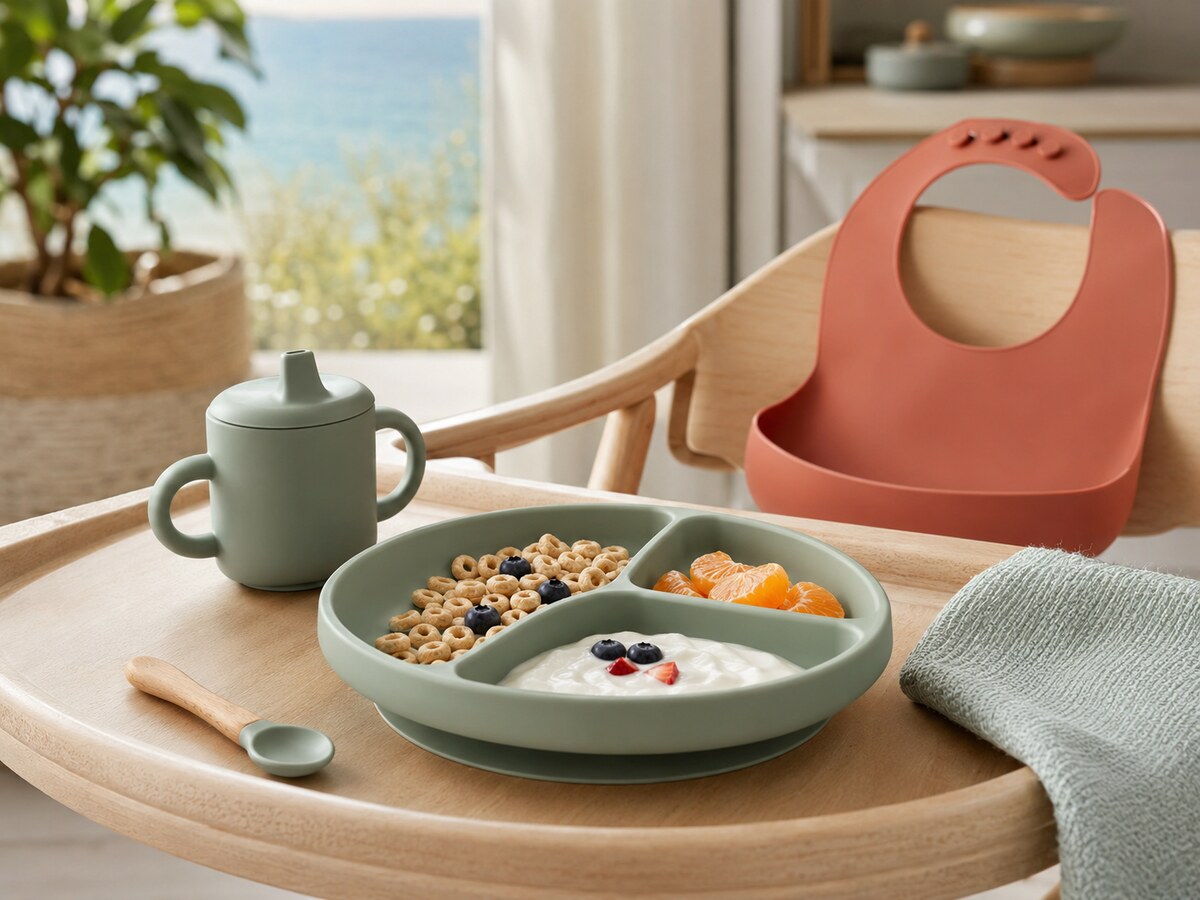
A silicone baby feeding set can simplify early meals by putting several useful pieces into one coordinated kit. But sets that look similar in a photograph may feel very different at the table. Plate shape, suction performance, cup proportions, spoon softness and cleaning instructions all affect whether a set fits your child’s current stage and your family’s routine.
This guide explains what to check before buying. It is written for parents and gift buyers who want practical details rather than broad material claims. Product-specific instructions and the final label should always take priority.
1. Start with the pieces your routine actually needs
A larger set is not automatically a better set. For first foods, a divided plate or shallow bowl and a small spoon may be enough. As independent eating develops, a bib and training cup become more useful. A well-planned starter set commonly includes:
- A plate or bowl with a stable base
- A soft bib with a wide catch pocket
- A spoon sized for small mouths and hands
- A handled or open training cup
Think about where the set will be used. A compact bowl may be easier to pack for childcare, while a larger divided plate can be more useful at home. The Little Ocean Silicone Feeding Set is an example of a four-piece approach designed around everyday self-feeding.
2. Read the complete material description
“Silicone” describes the principal material, but it does not always describe every part. A cup may include a plastic lid, and a spoon may contain a reinforced core. Look for a clear material list and instructions that match the intended use. Avoid relying only on phrases such as “premium” or “food grade” without product-specific information.
For feeding and teething items, check the final packaging for the applicable material, age, temperature and compliance information for your market. Our Safety & Materials guide explains why product-level documentation matters.
3. Evaluate plate shape and suction realistically
Suction can help reduce sliding, but performance depends on the surface. A clean, smooth, non-porous tabletop usually provides a better seal than a textured, dusty or curved surface. Before each meal, wipe the table and suction base, press the plate down firmly and test it gently.
Also inspect the plate itself. Rounded inside corners make food easier to scoop. A modest rim helps contain food without creating a deep space that is difficult for a new eater to reach. Dividers can keep textures separate, although an undivided bowl may be better for mixed meals.
4. Check whether the cup supports the next skill
Two handles can make a training cup easier to lift, while a small open cup helps children practice a different drinking motion. Some cups use removable lids or spouts, which means there are more parts to wash and inspect. Choose a design that matches the skill you want to practice rather than assuming one cup must cover every stage.
Check capacity as well. An oversized cup becomes heavy when full. A smaller cup is often easier for little hands and creates less mess while a child is learning.
5. Look closely at the spoon and bib
A first spoon should have a smooth surface, rounded edges and proportions suited to the child. The handle needs enough structure to guide food without feeling bulky. For a bib, look at neck adjustment, shoulder coverage and whether the catch pocket stays open during use.
No feeding accessory replaces supervision. Sit with the child, serve age-appropriate food and stop using any piece that is torn, cracked, permanently deformed or otherwise damaged.
6. Confirm cleaning and temperature instructions
Many silicone feeding pieces are easy to wash, but a complete set may contain components with different limits. Confirm whether each item is suitable for a dishwasher, microwave, freezer or sterilizing method before use. Wash everything before the first meal, separate removable parts and let all surfaces dry fully before storage.
Strongly colored foods can leave temporary marks, and trapped moisture can cause odors. Prompt rinsing, mild dish soap and open-air drying solve many everyday care problems. See our Product Care page for general cleaning principles.
7. Use a simple pre-purchase checklist
- Does the set include pieces appropriate for the child’s current stage?
- Are all materials and companion components identified?
- Will the suction base work on your usual table or highchair tray?
- Are the cup and spoon comfortably proportioned?
- Are cleaning and temperature limits stated clearly?
- Can every part be inspected easily before use?
Frequently asked questions
Are all silicone baby feeding sets microwave safe?
No blanket rule applies to every set. Silicone components may tolerate heat differently from lids, reinforced handles or decorative parts. Follow the instructions supplied with the exact product.
When should a silicone feeding item be replaced?
Replace it when you see tears, cracks, sticky areas, permanent deformation, loose parts or damage that prevents thorough cleaning. Inspect baby products before every use.
Is a divided plate necessary?
No. Dividers are useful for separating foods and textures, but some families prefer an open bowl. The best choice depends on the meal and the child’s stage.
Explore the complete SILIVEX Baby & Kids collection to compare feeding and teething essentials.
Product construction and care limits vary. Check the instructions supplied with the exact item and contact SILIVEX when you need help comparing options.