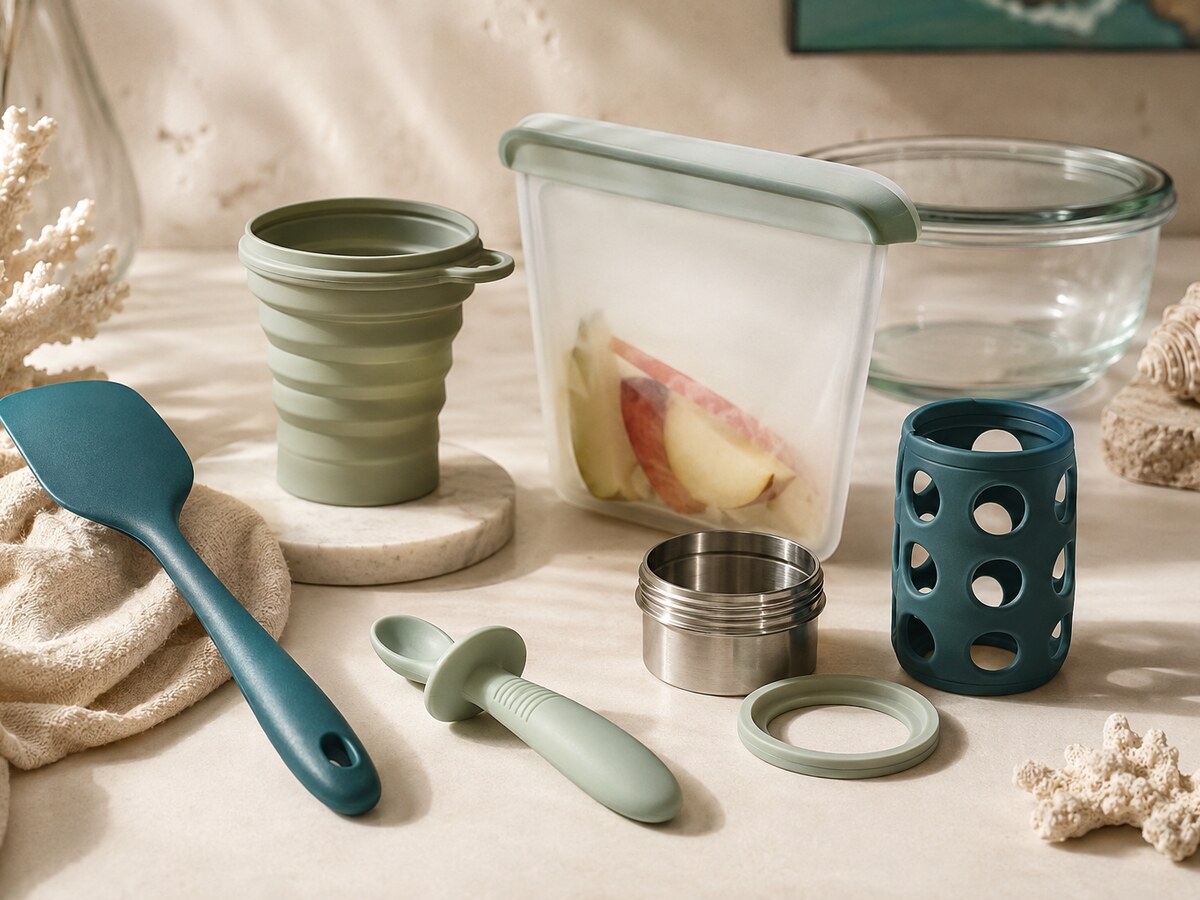
Is silicone safe for everyday products? The useful answer depends on the exact item, its intended purpose, how it was made, the other materials in its construction and whether it is used within the stated limits. “Silicone” alone is not a complete safety specification.
Well-designed silicone products can add flexibility, grip, insulation, protection and easy-clean surfaces to daily routines. Responsible selection still requires clear product information and appropriate care.
What silicone is
Silicone is a family of synthetic materials based on silicon, oxygen and organic groups. Manufacturers can formulate it with different hardness, color, flexibility and performance characteristics. That variety is why silicone appears in kitchen tools, baby products, seals, medical components, drinkware accessories and wellness products.
The same variety also means one product’s limits should not be copied to another. A soft teether, a baking tool and a protective cup boot are designed for different jobs.
Intended use comes first
Start by asking what the product is designed to contact and do. An item intended for food contact should carry information appropriate to that use. A teething product needs age, inspection and supervision guidance. A massage tool should explain that it is for general wellness rather than medical treatment.
Do not repurpose an attractive silicone object for food, baby or pet use unless it is specifically identified for that purpose. The SILIVEX Safety & Materials page summarizes these use-based distinctions.
“Food grade” is not the whole story
Terms such as “food grade” are helpful only when connected to the exact product, intended conditions and relevant market documentation. Buyers should still look for the material list, temperature range, care instructions, manufacturer or seller identification and any product-specific test information required for the destination market.
A responsible product page avoids turning one material phrase into a promise about every possible use.
Many products combine silicone with other materials
An insulated tumbler may have a stainless steel vessel, plastic lid, silicone gasket and silicone base boot. A kitchen utensil may include a reinforced handle. A collapsible cup can use a metal carry clip. Care and temperature limits are determined by the complete construction, not only the silicone component.
When comparing products, read the full material description and identify removable parts. Mixed construction is not a defect; it simply requires more specific information.
Heat resistance must be product specific
Silicone is often selected for temperature performance, but exact limits vary. Colorants, adhesives, inserts, thin sections and companion materials can change how a finished item should be used. Never assume that a silicone-containing product belongs in an oven, microwave, freezer, dishwasher or boiling-water process.
Follow the stated temperature range and appliance instructions. Keep kitchen tools away from open flames and heating elements, and do not leave them resting in a hot pan unless the product is designed for that use.
Odor, staining and surface feel
New products can carry packaging or manufacturing odors that often reduce after washing and airing. Strongly colored or aromatic foods may leave temporary stains or smells. Clean promptly with mild soap, rinse thoroughly and allow the product to dry in open air.
A persistent unusual odor, sticky surface, visible residue or change that prevents normal cleaning deserves attention. Stop using the item and contact the seller when the cause is unclear.
Cleaning supports safe use
Wash products before first use when instructed. Separate removable parts, reach folds and grooves, and dry everything completely before reassembly or closed storage. Avoid abrasive tools that can damage the surface.
For detailed general guidance, visit SILIVEX Product Care. The exact product instructions remain the controlling source.
Inspection matters for baby and pet products
Flexible products can still tear, stretch or become damaged. Inspect baby feeding, teething and pet accessories before every use. Replace items with cuts, missing pieces, deep bite marks, loose components, permanent deformation or areas that can no longer be cleaned.
Adult supervision is essential for baby products. Pet feeding and enrichment accessories should be removed when chewing begins.
Questions to ask before buying
- What is the product’s intended use?
- Which components are silicone, and what are the other materials?
- Are dimensions and capacity clearly stated?
- What are the temperature and appliance limits?
- How should each component be cleaned and dried?
- What damage means the item should be replaced?
- Is product-specific documentation available where required?
Frequently asked questions
Does silicone contain plastic?
Silicone is a distinct family of materials, but finished products may combine silicone with plastic components. Check the complete material list for the exact item.
Can every silicone product go in the dishwasher?
No. Dishwasher suitability depends on the complete construction and the manufacturer’s instructions.
How long does a silicone product last?
Service life depends on formulation, design, frequency of use, heat, cleaning and physical damage. Regular inspection is more useful than relying on one universal replacement date.
Is discoloration automatically dangerous?
Not necessarily, but unexplained color change combined with odor, stickiness, cracking or residue should be investigated. Stop use when the product cannot be cleaned or its condition is uncertain.
Explore the SILIVEX shop for products with clear material, use and care information.
Product construction and care limits vary. Check the instructions supplied with the exact item and contact SILIVEX when you need help comparing options.