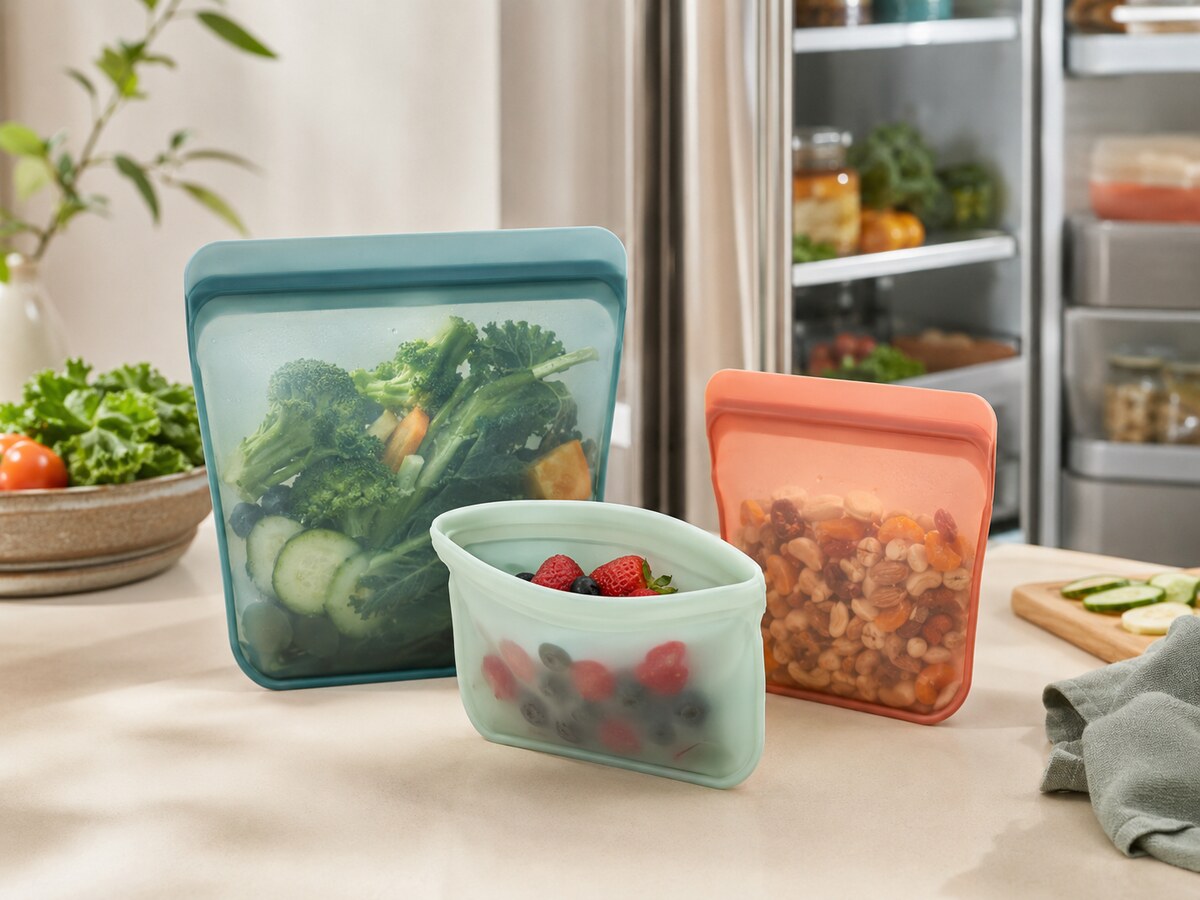
Reusable silicone food storage bags are a flexible alternative for snacks, chopped ingredients and refrigerated leftovers. They can stand up in a drawer, compress when empty and return to service many times. Their usefulness, however, depends on selecting the right size, closing them correctly and drying them thoroughly after cleaning.
This practical guide covers the details that make the biggest difference in daily use. Always check the exact product label before using any bag in a freezer, microwave, oven or dishwasher.
Choose sizes by food and routine
A multi-size set is useful because one bag rarely handles every job efficiently. A small bag is convenient for nuts, fruit pieces or a single snack. A medium bag can hold prepared vegetables or a lunch component. A larger bag is better suited to bulk ingredients and family-size leftovers.
Do not judge capacity by height alone. A stand-up base provides more usable volume and makes filling easier. Also consider the width of the opening: a wide mouth is easier to load, turn partly inside out and reach during cleaning. The SILIVEX Reusable Silicone Food Storage Bag Set uses three sizes to cover common storage routines.
Understand what the closure is designed to do
Pinch-close, press-seal and slider systems feel different in the hand. Whichever format you choose, align the closure from one end and work across it deliberately. After closing, run your fingers along the full width and inspect for food trapped in the seal.
A reusable storage bag should not be treated as automatically leakproof. Before transporting sauces or other liquids, test the closed bag over a sink and carry it upright in a secondary container. Never overfill: leaving space above the contents reduces pressure on the closure.
Match the bag to the food
Silicone bags work well for many dry and moist foods, but they are not the best container for every situation. Sharp bones, hard shells and pointed utensils can damage a flexible wall. Very oily, strongly pigmented or aromatic foods may require prompt cleaning to reduce staining or retained odor.
If you batch-cook, label the date with a removable marker or an external tag. Rotate older food forward and follow food-safety guidance for refrigeration and storage time. The container material does not extend the safe life of food.
Clean the corners, seal and base
Rinse soon after use so residue does not dry into the closure. Wash with warm water, mild dish soap and a soft brush or cloth. Pay special attention to the corners, the stand-up fold and both sides of the seal. Abrasive pads and sharp cleaning tools can roughen or cut the surface.
If the product is identified as dishwasher suitable, place it as directed so water can reach the interior and the bag cannot collapse around trapped food. A dishwasher-safe statement should come from the product instructions, not from a general assumption about silicone.
Dry completely before closing
Drying is one of the most important steps. Prop the bag fully open on a rack so air reaches the bottom and corners. Do not close and stack a damp bag. Trapped moisture can create an unpleasant smell and makes it harder to see whether the interior is genuinely clean.
For compact storage, collapse or nest bags only after every surface is dry. Store the closures open or loosely positioned rather than compressed under heavy objects.
Freezer, microwave and heat use require confirmation
Temperature resistance varies by construction. Confirm the final product’s stated range before freezing or heating. When freezing permitted foods, leave expansion space and keep the bag upright until the contents are solid. If microwave use is permitted, vent the bag as instructed and avoid sealed heating.
Never place a bag near an open flame, directly on a heating element or in an appliance unless that specific use is clearly authorized. Our Product Care guide provides more general information on mixed materials and heat limits.
Know when to replace a bag
Inspect each bag against good light. Replace it if you find a cut, puncture, split seam, closure that no longer aligns, sticky surface, permanent deformation or residue that cannot be removed. A reusable product still has a service life, and timely replacement supports safer, cleaner storage.
Quick everyday checklist
- Select a size that leaves space above the food.
- Keep sharp items away from the flexible walls.
- Clear the sealing channel before closing.
- Test liquids and carry them upright.
- Clean folds and corners promptly.
- Dry the bag fully before storage.
- Follow product-specific temperature limits.
Frequently asked questions
Can silicone bags hold soup?
Only if the product is intended for liquids and the closure has been tested. Do not assume leakproof performance. Cool food appropriately, avoid overfilling and transport the bag upright in a secondary container.
How can I reduce retained odor?
Rinse promptly, wash every fold and dry completely while open. Follow the manufacturer’s instructions before trying any stronger cleaning method.
Do reusable bags eliminate all disposable packaging?
They can reduce single-use bag consumption in suitable routines, but practical results depend on consistent reuse, care and the foods being stored.
Browse more SILIVEX Kitchen & Home essentials for flexible tools that support cooking, storing and organizing.
Product construction and care limits vary. Check the instructions supplied with the exact item and contact SILIVEX when you need help comparing options.