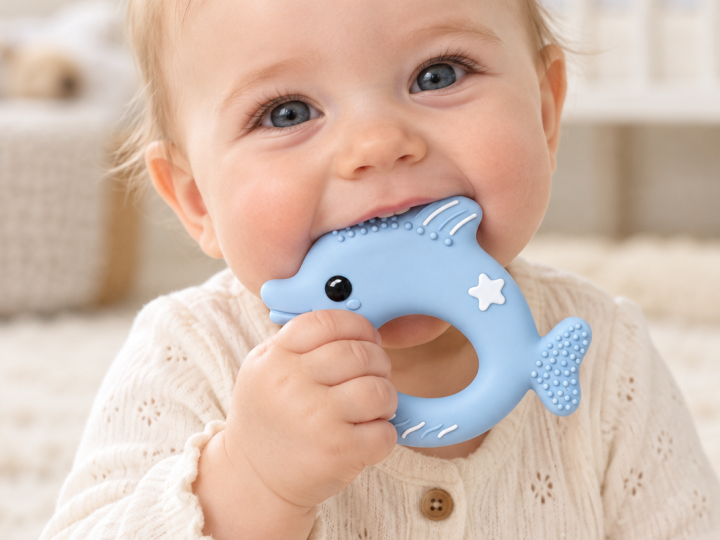
Silicone baby teethers are designed for frequent everyday use, which means they also need frequent cleaning.
Babies may drop teethers on the floor, carry them around the house, take them outside in a diaper bag, or use them during meals and travel. Over time, saliva, dust, lint and other everyday residues can collect on the surface.
Fortunately, a thoughtfully designed silicone teether can be relatively simple to care for.
At SILIVEX, we believe good baby products should not only look playful and feel comfortable—they should also fit naturally into a parent’s daily cleaning and storage routine.
Here is a practical guide to cleaning, drying and storing silicone baby teethers.
Why Regular Cleaning Matters
A baby teether is different from many other toys because it is often placed directly into the mouth.
That means parents should pay particular attention to keeping the surface clean.
Regular cleaning can help remove:
- saliva
- dust
- lint
- food residue
- dirt picked up from floors or bags
- residue from frequent handling
The exact cleaning method should always follow the manufacturer’s instructions, because silicone formulations, product structures and recommended temperatures can differ.
For everyday use, however, the basic routine is usually simple:
Clean → Rinse → Dry Completely → Store Clean
Keeping this process simple makes it easier to maintain consistently.
Step 1: Check the Teether Before Cleaning
Before washing a teether, take a few seconds to inspect it.
Look for:
- cuts
- cracks
- torn silicone
- damaged edges
- unusual surface changes
- loose components
- areas where the material appears to be separating
A one-piece silicone teether is relatively easy to inspect because there are fewer joints and separate parts.
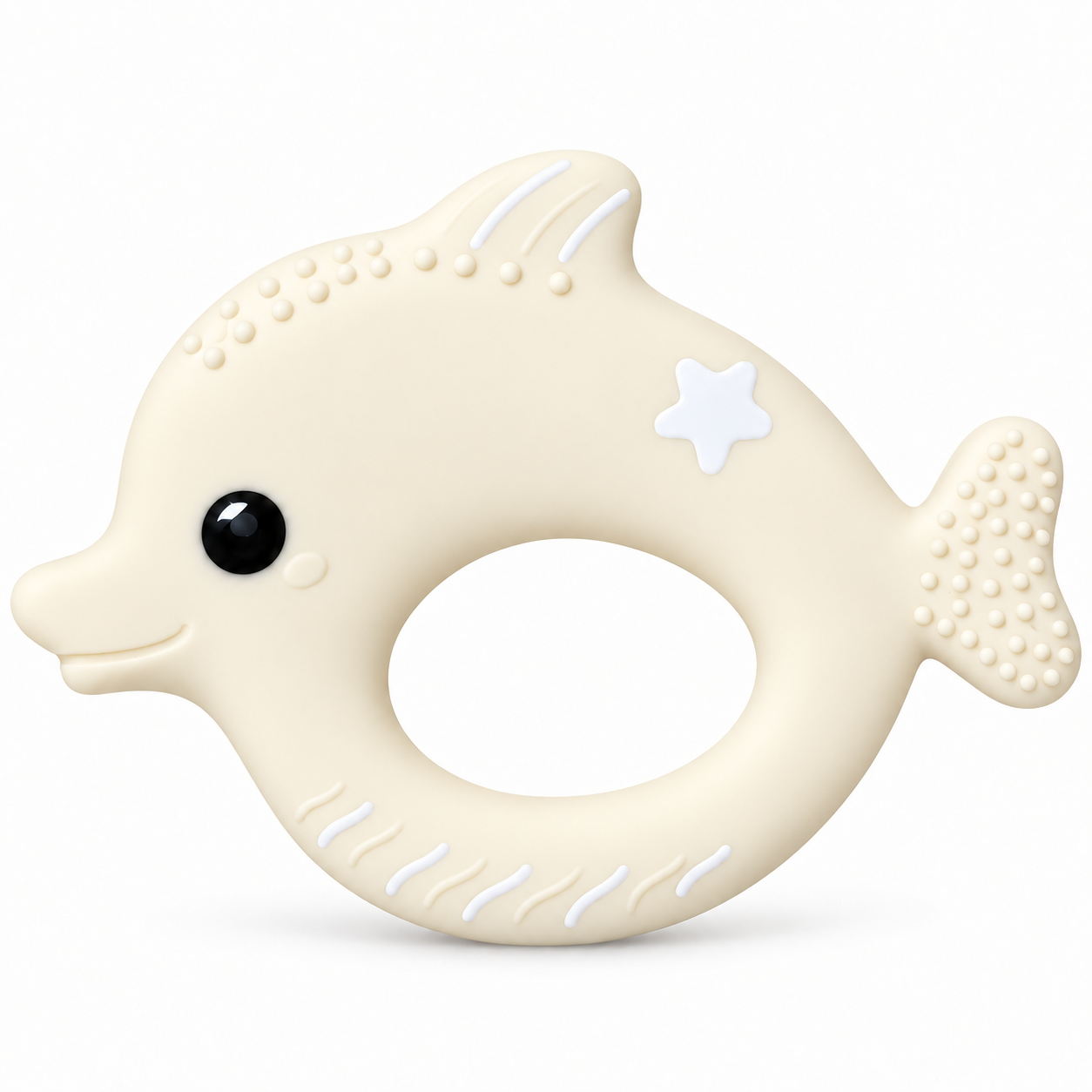
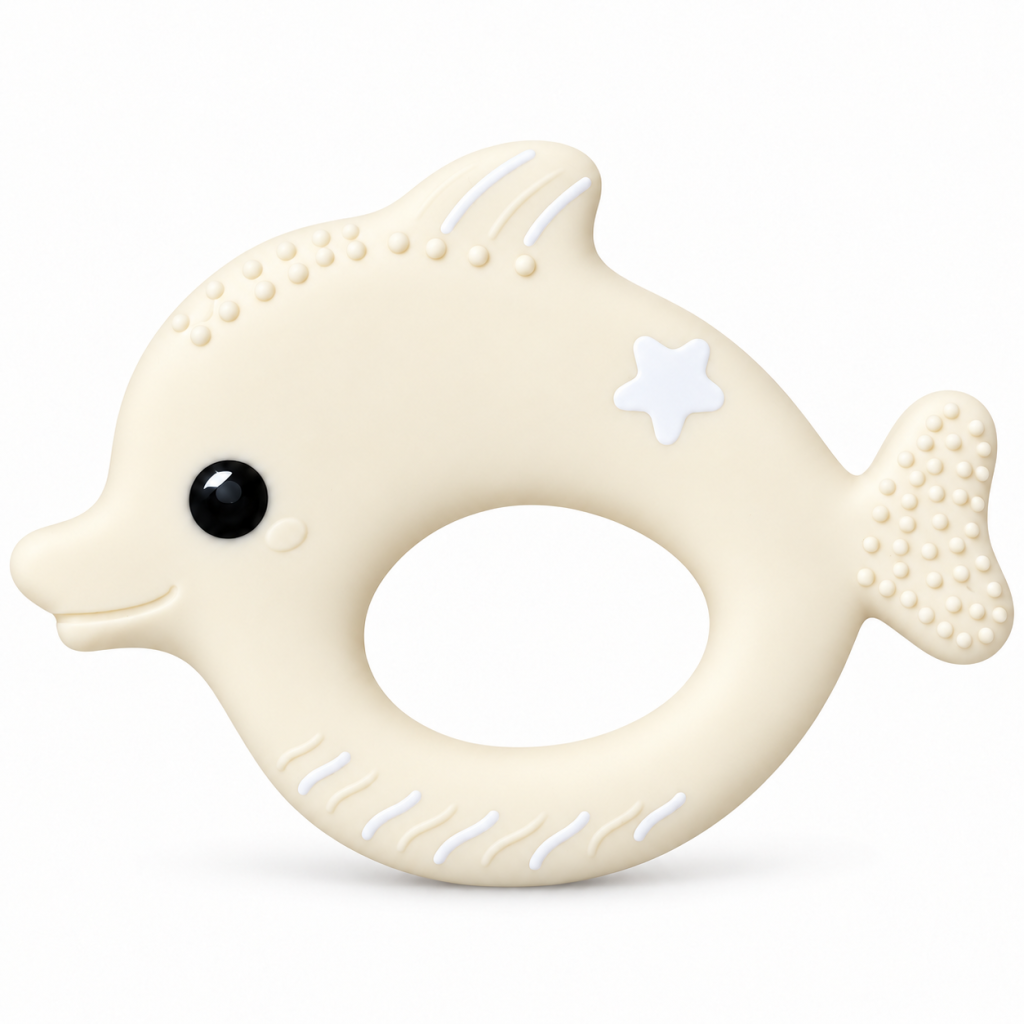
The SILIVEX Crab, Dolphin and Starfish Teethers use integrated silicone designs with open grip areas and visible surfaces, helping make routine inspection straightforward.
If a baby product becomes damaged, parents should stop using it and follow the manufacturer’s guidance.
Step 2: Wash the Surface Thoroughly
For routine cleaning, use the method recommended for the specific teether.
In many everyday situations, parents may clean silicone products using clean water and a suitable mild cleaning method.
Pay attention to the areas babies touch and chew most frequently.
These can include:
- raised textures
- grip openings
- edges
- animal-shaped details
- grooves and ridges
Textured areas are useful for tactile exploration, but they should also be cleaned carefully so residue does not remain between raised patterns.
For example, the SILIVEX ocean-inspired collection includes different surface textures across the crab, dolphin and starfish designs.
The best way to clean these areas is to make sure water and cleaning solution can reach the entire surface rather than simply wiping the front of the product.
Avoid Using Harsh Cleaning Products
Baby teethers do not need aggressive household chemicals for routine cleaning.
Strong cleaners may leave unwanted residue or affect the product surface.
Parents should avoid using products that are not recommended by the teether manufacturer.
A mild, simple cleaning routine is usually easier to manage and reduces the chance of leaving unnecessary residue on something that a baby may put into their mouth.
Step 3: Rinse Carefully
After cleaning, rinse the teether thoroughly.
Pay particular attention to:
- texture grooves
- raised dots
- narrow sections
- grip holes
- decorative indentations
Any cleaning residue should be removed before the product is dried and returned to the baby.
This is another reason why simpler product geometry can be beneficial.
A teether with many hidden cavities or difficult internal channels may take more time to rinse properly.
Open, accessible designs are generally easier to manage in everyday family life.
Step 4: Let the Teether Dry Completely
Drying is just as important as washing.
A teether that is placed into a closed container while still wet may retain unnecessary moisture.
After rinsing, shake off excess water and allow the product to dry thoroughly in a clean, well-ventilated area.
A drying rack or clean surface can work well, depending on the product instructions.
Parents should avoid immediately placing a wet teether inside a sealed storage case.
Instead, use a simple routine:
Wash → Rinse → Air Dry → Store
This small habit can make daily care much easier.
Why One-Piece Designs Are Easier to Dry
Product structure affects drying time.
Teethers made from several connected parts may have small gaps where water collects.
Hollow components may also be more difficult to dry completely.
By comparison, a simple solid or one-piece silicone design can make it easier to see whether moisture remains.
The SILIVEX Crab, Dolphin and Starfish Teethers are designed around open shapes and accessible surfaces, helping parents quickly inspect the product after washing.
Can Silicone Teethers Be Boiled?
There is no single answer that applies to every silicone teether.
Some silicone products may tolerate high-temperature cleaning methods, while others may have specific temperature limitations because of their formulation, printing, attached components or product design.
Parents should therefore follow the cleaning instructions provided with the specific product.
Do not assume that every product labeled “silicone” can automatically be boiled, microwaved or placed in a dishwasher.
The safest approach is simple:
Follow the manufacturer’s recommended cleaning and temperature instructions.
Can Silicone Teethers Go in the Dishwasher?
Again, this depends on the specific product.
Some silicone baby products are designed for dishwasher cleaning, while others may require hand washing.
Always check the product instructions before using a dishwasher.
This is especially important for products that contain:
- multiple materials
- printed decorations
- attached accessories
- non-silicone components
Simple one-material products are generally easier to care for, but product-specific instructions should always take priority.
Step 5: Store the Teether in a Clean Place
Once the teether is fully dry, storage becomes the next consideration.
Parents often carry baby products inside:
- diaper bags
- handbags
- stroller organizers
- travel bags
- nursery drawers
But these spaces may also contain phones, keys, tissues, snacks and other everyday items.
Putting a clean teether directly into a bag can quickly undo the effort spent cleaning it.
A dedicated storage case can help keep small baby products separated from other objects.
This is one reason SILIVEX developed a compact PP storage case for everyday organization.
The case can be used to keep teethers and other small accessories separate during storage or travel.
Make Sure the Teether Is Dry Before Storage
One important rule is easy to remember:
Never store a wet teether in a closed container.
Allow the teether to dry completely first.
A closed case is useful for keeping a clean, dry product organized, but it should not be used as a substitute for proper drying.
The ideal sequence is:
- Clean the teether
- Rinse thoroughly
- Allow it to dry completely
- Inspect the surface
- Place it into a clean storage case
This routine is simple enough to become part of everyday baby care.
Clean the Storage Case Too
A clean teether placed into a dirty storage box is no longer clean.
Storage cases should therefore be cleaned regularly as well.
Check the corners, lid, latch and internal surfaces for:
- dust
- crumbs
- moisture
- residue
Allow the storage case itself to dry completely before putting a clean teether inside.
Parents who use the case frequently during travel may want to include it in the same regular cleaning routine as the teether.
What About Teethers Used Outside the Home?
Travel creates additional opportunities for a teether to become dirty.
A baby may drop it onto:
- a stroller
- a restaurant floor
- a car seat
- a shopping cart
- a park surface
- a public changing area
Parents should decide whether the product needs to be cleaned before giving it back to the baby.
Carrying a clean spare teether can be useful during longer outings.
A simple storage case can also help keep clean products separate from used ones.
For example, parents may carry one clean teether in a storage case while keeping another available for immediate use.
How Often Should a Silicone Teether Be Cleaned?
There is no universal schedule that fits every family.
How often a teether needs to be cleaned depends on how it is used.
Cleaning is especially important after the product has:
- fallen onto a dirty surface
- been used during meals
- been handled by several people
- been carried loose in a bag
- been used outside the home
Many parents also prefer to clean baby teethers regularly as part of their daily routine.
The most practical approach is not to follow an unnecessarily complicated schedule, but to keep the product visibly clean and follow the manufacturer’s care instructions.
Avoid Unnecessary Fragrances
Strongly fragranced cleaning products may leave smells behind on silicone surfaces.
Because babies may put teethers directly into their mouths, parents may prefer simple cleaning methods without unnecessary fragrance or residue.
If a product develops a persistent unusual smell, discoloration or surface deterioration, inspect it carefully and follow the manufacturer’s recommendations.
Keep Teethers Away from Unclean Surfaces
Proper storage can reduce how often deep cleaning is needed.
Try to avoid leaving teethers directly on:
- kitchen counters
- restaurant tables
- bathroom surfaces
- the bottom of handbags
- floors
- outdoor surfaces
When the baby is not using the teether, placing it on a clean surface or inside a dedicated storage box can make everyday hygiene easier.
Do Not Share Without Cleaning
Babies often reach for each other’s toys.
If a teether has been used by another child, parents may want to clean it before giving it back to their own baby.
Simple one-piece silicone designs can be convenient in these situations because they can be cleaned without removing several small parts.
When Should a Teether Be Replaced?
Silicone is a durable material, but no baby product lasts forever.
Parents should inspect teethers regularly and replace them when necessary.
Stop using the product if you notice:
- cracking
- tearing
- deep bite damage
- damaged edges
- separation of components
- significant surface deterioration
If you are uncertain about the condition of a product, it is safer to follow the manufacturer’s replacement guidance.
A Simple Everyday Teether Care Routine
Parents do not need a complicated system.
A practical routine can be as simple as:
After normal use
Rinse or clean according to product instructions.
After dirty contact
Clean thoroughly before reuse.
After washing
Allow the teether to dry completely.
Before storage
Inspect the product and make sure it is fully dry.
During travel
Keep clean teethers inside a dedicated case rather than loose inside a bag.
Regularly
Clean the storage case and inspect the teether for damage.
This routine only takes a little time but makes baby products much easier to manage.
Why Product Design Makes Cleaning Easier
Easy cleaning starts long before the product reaches a parent.
It begins during product design.
Designers need to consider whether the finished teether contains:
- unnecessary deep grooves
- hard-to-reach cavities
- enclosed spaces
- fragile decorative pieces
- complex joints
At SILIVEX, we prefer designs that combine visual character with practical simplicity.
Our Crab Teether, Dolphin Teether and Starfish Teether each have their own distinctive appearance, but all three are based on open shapes, rounded surfaces and integrated grip areas.
This makes the collection visually playful while keeping daily care straightforward.
Clean, Dry, Store
Parents already have enough complicated routines.
Cleaning a baby teether should not become another one.
The easiest rule to remember is:
Clean it carefully.
Dry it completely.
Store it clean.
Combined with regular product inspection and the manufacturer’s care instructions, this simple routine can help keep silicone teethers ready for everyday use.
At SILIVEX, we design small everyday products around real family routines.
From our ocean-inspired silicone teethers to our compact PP storage case, the goal is simple: create products that are playful for babies, practical for parents, and easier to use every day.
Product construction and care limits vary. Check the instructions supplied with the exact item and contact SILIVEX when you need help comparing options.